
Primer Notes
Period frames: when the original frame adds money and when it gets in the way
Frames from this period are collected in their own right, and the wrong one can cost you at resale. How to test whether a frame belongs to the picture it is holding.
Buyers look through the frame at the picture, which is how frames get thrown away. For work from this period the frame is often a designed part of the object rather than a container bought later. Artists of the 1890s specified profiles, finishes and sometimes carved decoration, and dealers of the time framed to house patterns you can learn to recognise. A frame that belongs to its picture can carry a real share of the total value.
The reverse is also true. A heavy gilt frame bought in the 1980s to make a modest picture look important will suppress the price, because every serious buyer reads it as a sales tactic. Frames are cheap to change and expensive to get wrong. Before you agree a price, decide what the frame is doing for the object and what it would cost to replace.
Testing whether the frame belongs
Take the picture out of the frame, or ask the seller to do it while you watch. The rebate is the shelf the picture sits on, and an original frame usually shows a rebate that matches the panel or stretcher closely with old dirt built up along the line. Fresh wood in the rebate means the frame was cut down or opened up. Nail holes tell the same story, since each reframing leaves its own set.
Look at the back of the frame as carefully as the front. Old framers pasted labels there, and those labels give you a city, sometimes a street address and often a date range for the business. Original backing boards, hanging hardware and dust seals age with the object and are worth keeping even when they are replaced for conservation reasons. Photograph everything before any of it is removed.

Surface is where most frame value sits. Water gilding over gesso has a depth and a slight coolness that oil gilding does not reach, and it burnishes to a hard shine on the raised parts. Compo ornament pressed into moulds was standard and is not a fault, though it cracks and lifts with age. A frame sprayed with gold paint at some point in the last fifty years is a modern object regardless of its profile.
-
1
Check the rebate for fresh cuts, which show a frame adapted from something else
-
2
Count the sets of nail holes on the back to see how many times the picture was reframed
-
3
Read every framer label and photograph it before conservation work begins
-
4
Test the gilding by looking at how light behaves on burnished and matte areas
-
5
Ask whether the glass is original, because early glass has visible waves and small bubbles
-
6
Price the frame separately in your own notes, even when the seller refuses to
Condition problems hide behind frames more often than behind anything else. A frame covers the tacking edges of a canvas, the trimmed margins of a print and the mount burn on a drawing. Sellers know this, and a refusal to unframe is one of the clearest signals in the trade. Any purchase made on a framed view alone should carry a written right of return once the object is out.
Keeping, restoring or replacing
When the frame is period and correct, spend money on stabilising it rather than on making it look new. Regilding an original surface removes the history that made it valuable, and buyers pay for the old surface even when it is worn. When the frame is wrong for the picture, keep it anyway rather than discarding it, since frames of this age sell on their own. Store it flat and label it with the picture it came off.
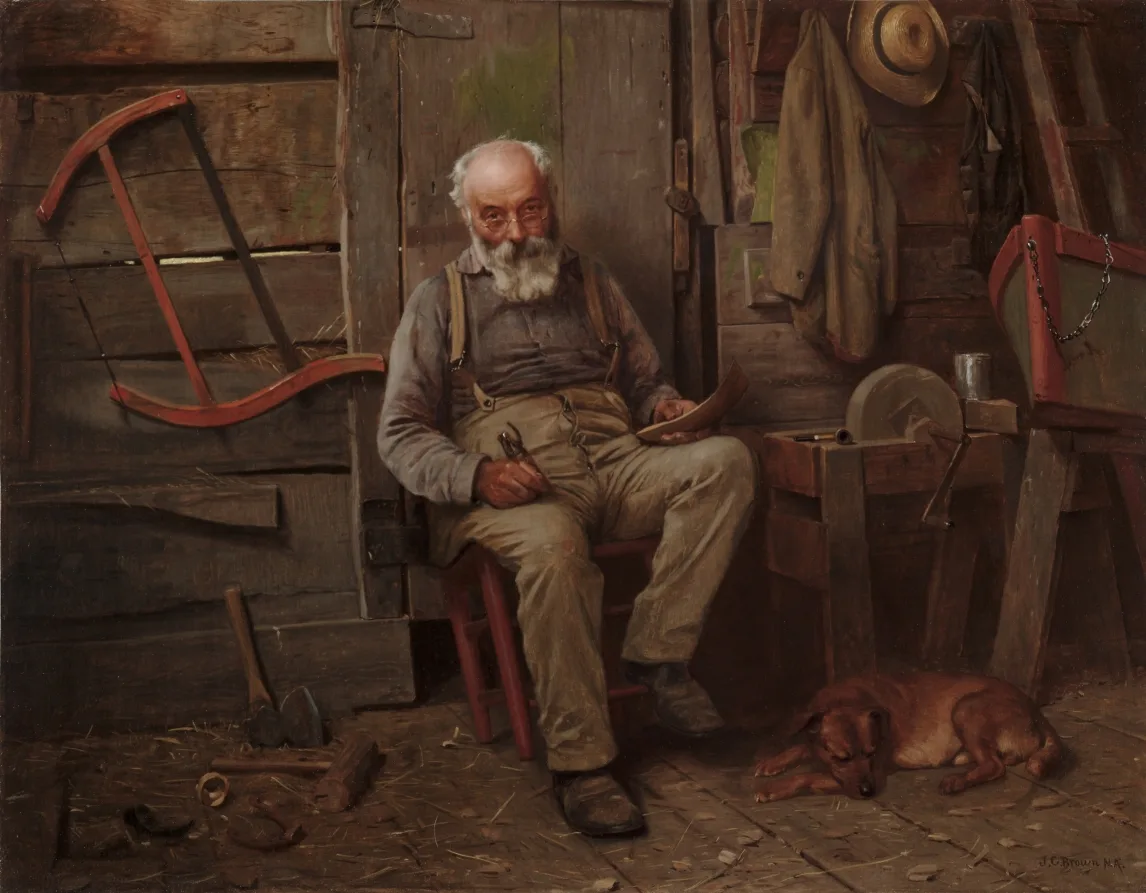
A frame is either part of the object or a claim about it, and the back of the frame tells you which.
Institutional catalogues increasingly record frames as objects with their own descriptions, and the entries published by the National Gallery of Art and the Cleveland Museum of Art are worth reading for the vocabulary alone. Learning the terms lets you ask precise questions at a fair. Precise questions get shorter and more honest answers.
Frequently asked questions
Does the original frame add value to a painting?
Often, yes. An original or period frame chosen by the artist or the first owner adds interest and, for some artists, a real premium. A later frame in a period style adds decoration rather than value.
Should I replace a damaged period frame?
Repair it if the damage is cosmetic. A frame restorer can rebuild composition ornament and regild losses. Replace it only when the frame is structurally unsound or plainly wrong for the picture.
How can I tell if a frame is old?
Look at the back. Old frames show hand cut mitres, oxidised wood, old nail holes and layers of dust that a new frame cannot fake convincingly. Gesso and gilding that crack in a fine network are also a sign of age.
Still deciding? Take the next step.
Stuck on this step?
Still unsure what this means for you?
Notes stay general on purpose. Describe your own case — the work, the price, the seller — and we will answer by email.